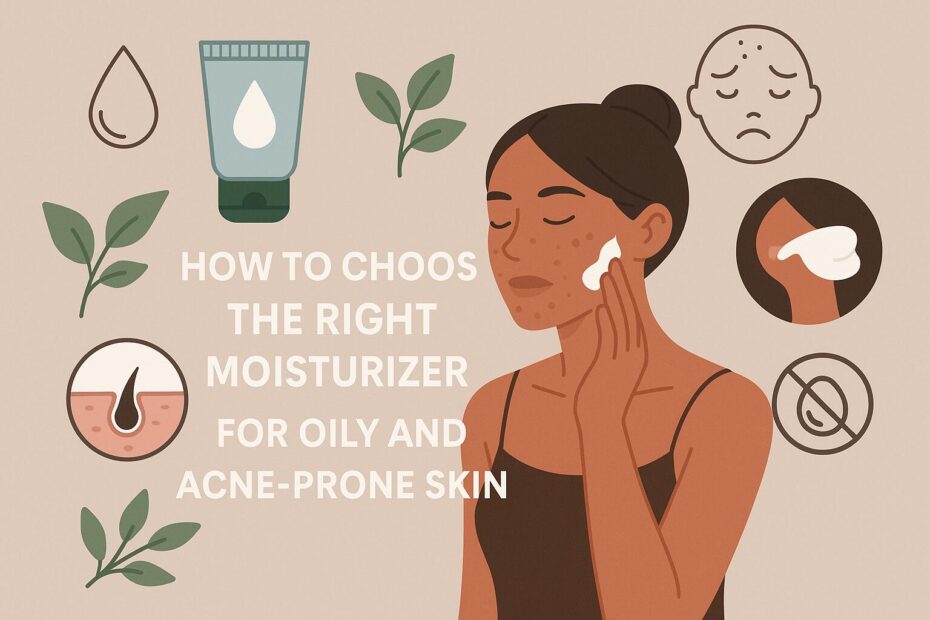
If you have oily and acne-prone skin, using a moisturizer might feel unnecessary or even risky. After all, why add more moisture when your skin already feels greasy? But here’s the truth: hydration is essential, even for oily skin types. In fact, skipping moisturizer can lead to increased oil production and more frequent breakouts.
Choosing the right moisturizer is the key—it should hydrate your skin without clogging pores or making your face greasy. In this guide, we’ll break down everything you need to know to confidently select a moisturizer that works for your skin type and supports a clear, balanced complexion.
Why Moisturizer is Essential for Oily & Acne-Prone Skin
Contrary to the myth that oily skin doesn’t need moisturizer, the truth is that all skin types need hydration. When your skin lacks moisture, it compensates by producing even more oil, which can clog pores and lead to blackheads, whiteheads, and acne.
Benefits of Using a Moisturizer for Oily Skin:
- Balances oil production by preventing your skin from becoming overly dry
- Strengthens the skin barrier, protecting it from pollutants and bacteria
- Reduces inflammation and soothes active breakouts
- Improves the effectiveness of acne treatments by minimizing dryness or irritation from actives like salicylic acid or retinol
Skipping moisturizer can weaken the skin barrier, increase irritation, and cause an imbalance in oil production—all of which make breakouts worse.
Key Factors to Consider When Choosing a Moisturizer
To find the perfect moisturizer for oily and acne-prone skin, you need to focus on texture, ingredients, and formulation. Here’s what to look for:
1. Look for “Non-Comedogenic” Products
This label means the moisturizer is designed not to clog pores—a crucial feature for acne-prone skin. Products without this label may contain oils or waxes that can cause breakouts.
2. Choose Oil-Free or Water-Based Formulas
Oily skin already produces excess sebum, so using oil-based creams can make your skin feel heavy and greasy. Opt for lightweight, oil-free, or water-based moisturizers that provide hydration without added shine.
Pro Tip: Gel-based moisturizers are ideal for oily skin. They absorb quickly, feel weightless, and don’t leave a sticky residue.
3. Look for the Right Ingredients
Best Ingredients for Oily & Acne-Prone Skin:
- Niacinamide – Regulates oil production, reduces redness, and improves skin texture
- Hyaluronic Acid – A gentle, non-greasy humectant that deeply hydrates without clogging pores
- Salicylic Acid – Exfoliates inside the pores and helps prevent acne
- Zinc PCA – Controls sebum production and reduces inflammation
Ingredients to Avoid:
- Mineral oil – Can clog pores and trap bacteria
- Coconut oil – Though natural, it’s comedogenic and too heavy for oily skin
- Heavy silicones (like dimethicone) – Can create a barrier that traps oil and bacteria
- Artificial fragrances and alcohol – May irritate sensitive or acne-prone skin
Best Types of Moisturizers for Oily & Acne-Prone Skin
Not all moisturizers are created equal. Here’s a quick comparison of moisturizer types that work best for oily skin:
| Type | Why It Works |
| Gel-Based | Lightweight, fast-absorbing, non-greasy; great for summer or humid weather |
| Oil-Free Creams | Provide hydration without clogging pores or feeling heavy |
| Lotions with AHA/BHA | Exfoliate gently while keeping skin hydrated and smooth |
| Mattifying Moisturizers | Help reduce shine and control excess sebum throughout the day |
How to Apply Moisturizer the Right Way
Applying your moisturizer correctly can make a big difference in how well it works.
Morning Routine:
- Cleanse your face with a gentle, oil-free cleanser
- Apply your acne treatment or serum
- Use a lightweight, oil-free moisturizer to seal in hydration
- Follow with a broad-spectrum SPF
Evening Routine:
- Cleanse to remove makeup, oil, and dirt
- Apply any night treatments (like retinol or exfoliating serums)
- Finish with a hydrating, non-comedogenic moisturizer to repair and nourish overnight
Even if you’re using active ingredients, don’t skip moisturizer—it helps reduce irritation, supports healing, and prevents peeling or dryness.
Final Thoughts
Choosing the right moisturizer for oily and acne-prone skin doesn’t have to be complicated. Focus on lightweight, non-comedogenic, oil-free formulas with skin-friendly ingredients like niacinamide, hyaluronic acid, and zinc PCA. Avoid heavy oils and artificial fragrances that can aggravate acne.
A well-chosen moisturizer, like the Deconstruct Oil-Free Moisturizer, can do more than just hydrate—it can help balance your skin, reduce breakouts, and give you a healthier, clearer complexion. Remember, hydration is key—even for oily skin.